
How to Coordinate Couples Trips Without the Chaos
October 7, 2026
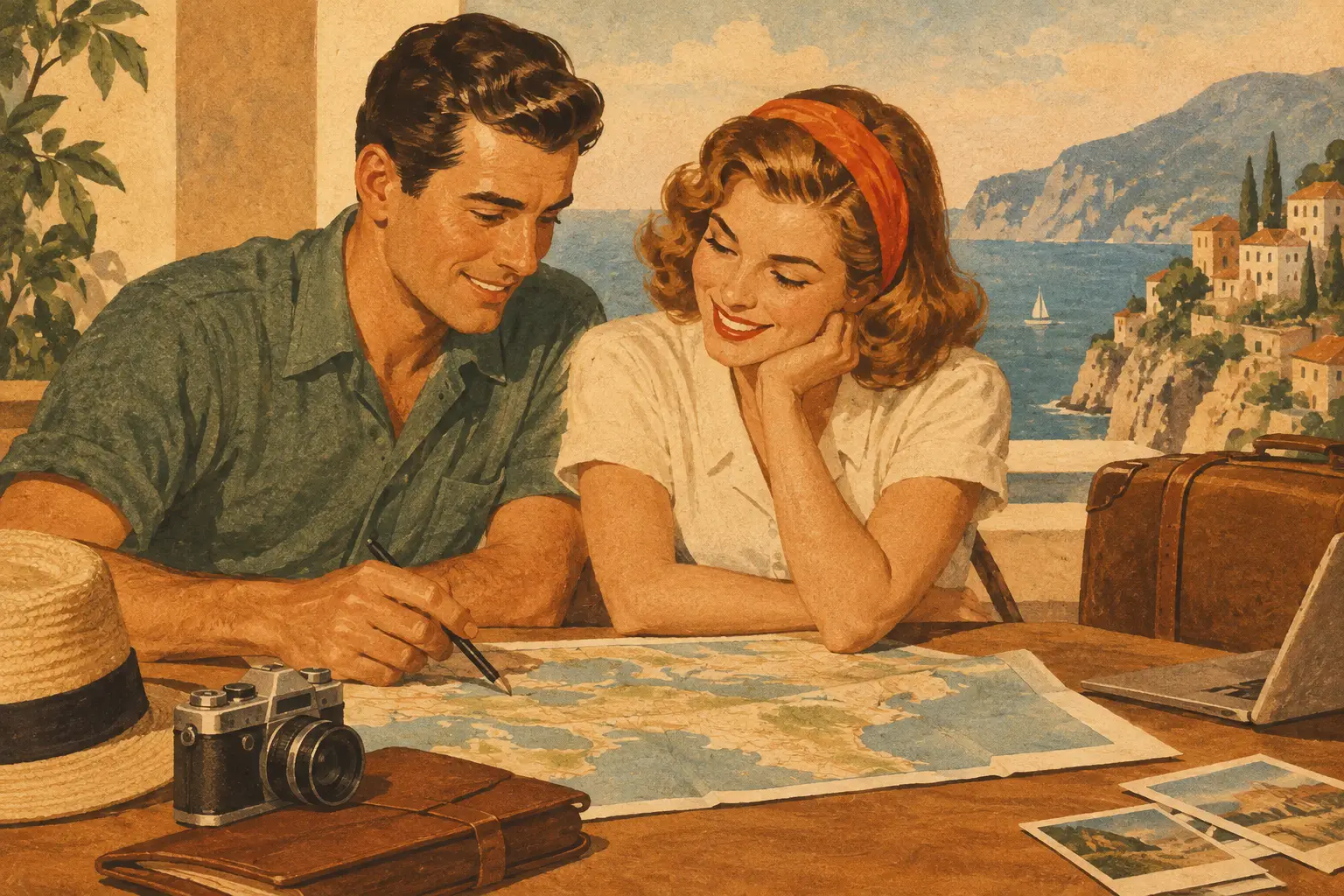
A couples trip can go sideways long before either of you packs a bag. One person has 37 saved restaurant videos, the other has a flight confirmation buried in email, and neither is sure whether that “quick day trip” is actually a three-hour drive. Learning how to coordinate couples trips is less about creating a minute-by-minute vacation schedule and more about making decisions together before small mismatches turn into vacation friction.
The goal is simple: spend less time searching, forwarding, and renegotiating - and more time enjoying the place you came to see. Here’s how to build a trip that feels shared, organized, and still spontaneous.
Start with the trip feeling, not the spreadsheet
Before comparing hotels or mapping attractions, talk about what each of you wants the trip to feel like. “Relaxing” can mean poolside afternoons to one person and a slow morning followed by a full day of exploring to another. “Adventurous” might mean a sunrise hike, a food tour, or simply trying a neighborhood neither of you knows.
Set aside 15 minutes to answer a few honest questions: What is the one thing you would be disappointed to miss? How much downtime do you want? Are you prioritizing great food, nightlife, scenery, culture, or outdoor time? What kind of splurge feels worth it?
This conversation is not about winning the itinerary. It is about spotting mismatched expectations while they are easy to solve. If one of you wants a packed city break and the other needs an unhurried reset, build in both: choose one anchor activity each day and protect open time around it.
How to coordinate couples trips around a shared budget
Budget conversations get awkward when they happen after someone has fallen in love with a hotel suite. Have the numbers conversation early, before bookings create pressure.
Start with a total trip range, then decide which categories matter most. You may be happy with a smaller room if it puts you in a walkable neighborhood, or prefer to spend less on dinners so you can book a memorable guided excursion. There is no universally right split. The useful question is where your shared money creates the best experience.
Agree on how you will pay, too. Some couples split everything evenly. Others divide costs based on income, take turns covering categories, or set a shared spending cap and settle up afterward. For a short trip, a simple approach often works best: track major shared purchases and let smaller personal extras stay personal.
Leave room for the unplanned moments. A budget with no cushion can turn a last-minute concert, a scenic detour, or a perfect local dinner into a debate. A small “yes fund” gives you both permission to say yes when the trip surprises you.
Create one home for every detail
Couples trips become complicated when information lives everywhere: booking apps, calendar events, screenshots, browser tabs, DMs, notes, and memory. A shared trip hub prevents the classic airport question: “Wait, what time is our train?”
Keep transportation confirmations, lodging addresses, reservation times, activity details, and important contacts in one place that both people can access from their phones. Add the ideas you are still considering, too. A saved beach club or a bakery recommendation is much more useful when it sits on the map beside your hotel rather than disappearing into a social feed.
Plan WeGo can bring those moving pieces into a visual itinerary, so both travelers can see what is booked, what is nearby, and what still needs a decision. The point is not to make the trip rigid. It is to eliminate the scavenger hunt for basics when you are checking out, navigating a new city, or standing outside a reservation.
Give each person ownership
Shared planning does not mean both people need to research every single choice together. That can make a two-person getaway feel like a committee meeting.
Divide the work by interest or strength. One person might handle flights, airport transfers, and lodging. The other might curate restaurants, activities, and a few hidden gems. If you are taking a road trip, one person can map the route and charging or gas stops while the other chooses scenic stops and overnight stays.
Ownership works best when there is a clear check-in point. Whoever researches a category should offer two or three strong options, not an endless list. The other person can weigh in, and then you decide. It keeps planning collaborative without dragging out every choice.
Book the anchors, leave the texture open
A good couples itinerary has structure, but it should still breathe. Book the items that are hard to replace: flights, accommodations, transportation between cities, timed-entry attractions, major tours, and a dinner reservation you genuinely care about.
Then resist filling every blank space. The best parts of a trip are often the unscripted ones - lingering over coffee, taking the long way through a neighborhood, ducking into a gallery, or staying at a beach longer because it is actually perfect.
A practical rhythm is one main commitment per day, especially on a short getaway. In a destination with long travel times or a lot to see, you may add a second smaller plan, such as drinks after a museum or a nearby evening walk. But leave transition time. Getting from a hotel to a trailhead or from a train station to dinner always takes longer than it looks on a highlight reel.
Use a map to test the plan
A list can make a day look easy. A map tells the truth.
Plot lodging, reservations, sights, and saved ideas before you lock in the schedule. You may discover that your “casual lunch” is across town from your afternoon activity, or that three saved spots happen to be within a 10-minute walk of each other. That changes the plan quickly.
Mapping is especially valuable for road trips, hikes, and bike routes. Check daylight, route difficulty, parking, fuel or charging needs, restrooms, and the realistic time required to reach the next stop. A beautiful route can still be a bad fit if it means arriving after a restaurant has closed or starting a trail in the hottest part of the day.
Decide how you will make calls on the go
Even a thoughtful plan will change. Flights run late. Rain moves in. A restaurant disappoints. One of you gets tired, or one of you finds a festival that was not on the itinerary. The couples who travel well are not the ones who avoid changes. They have a simple way to handle them.
Try a quick reset when plans shift: name the problem, name the priority, and choose the next best move. If rain wipes out your beach afternoon, is the priority still relaxation, great food, or seeing something local? That answer makes the replacement plan clearer.
It also helps to give each other veto power on low-stakes choices. If one person is not feeling a crowded bar, a strenuous hike, or another museum, do not treat it as a rejection of the trip. Find the version that works for both of you, or split up for an hour and reconnect later. You are traveling together, not attached at the hip.
Protect your time as a couple
Planning is logistics. A great couples trip is connection.
Put your phones away for a meal or a sunset, even if you also want Insta-worthy content. Take photos, save places, and document the moment - then return to it. If you are both constantly coordinating, posting, or comparing the plan to what you expected, the trip can start to feel like work.
Build in small rituals that belong to the two of you: a morning walk, one surprise pick each, a nightly recap over dessert, or a rule that the person who chose the day’s activity gets to choose the playlist. These details cost nothing, yet they often become the memories you talk about long after the confirmation emails are gone.
Share the memories while they are still vivid
When the trip ends, do not let its best moments dissolve into a crowded camera roll. Save favorite spots, photos, routes, and the little discoveries that made the getaway yours. A documented itinerary can become a practical record for your next trip and an easy story to share with friends who ask where you stayed or what you loved.
The strongest couples trips are not perfectly optimized. They have a clear plan, enough flexibility to follow a great surprise, and room for both people to feel heard. Get those pieces in place, and the logistics fade into the background - right where they belong.