
A 14-Day Cross Country Itinerary Example
October 9, 2026
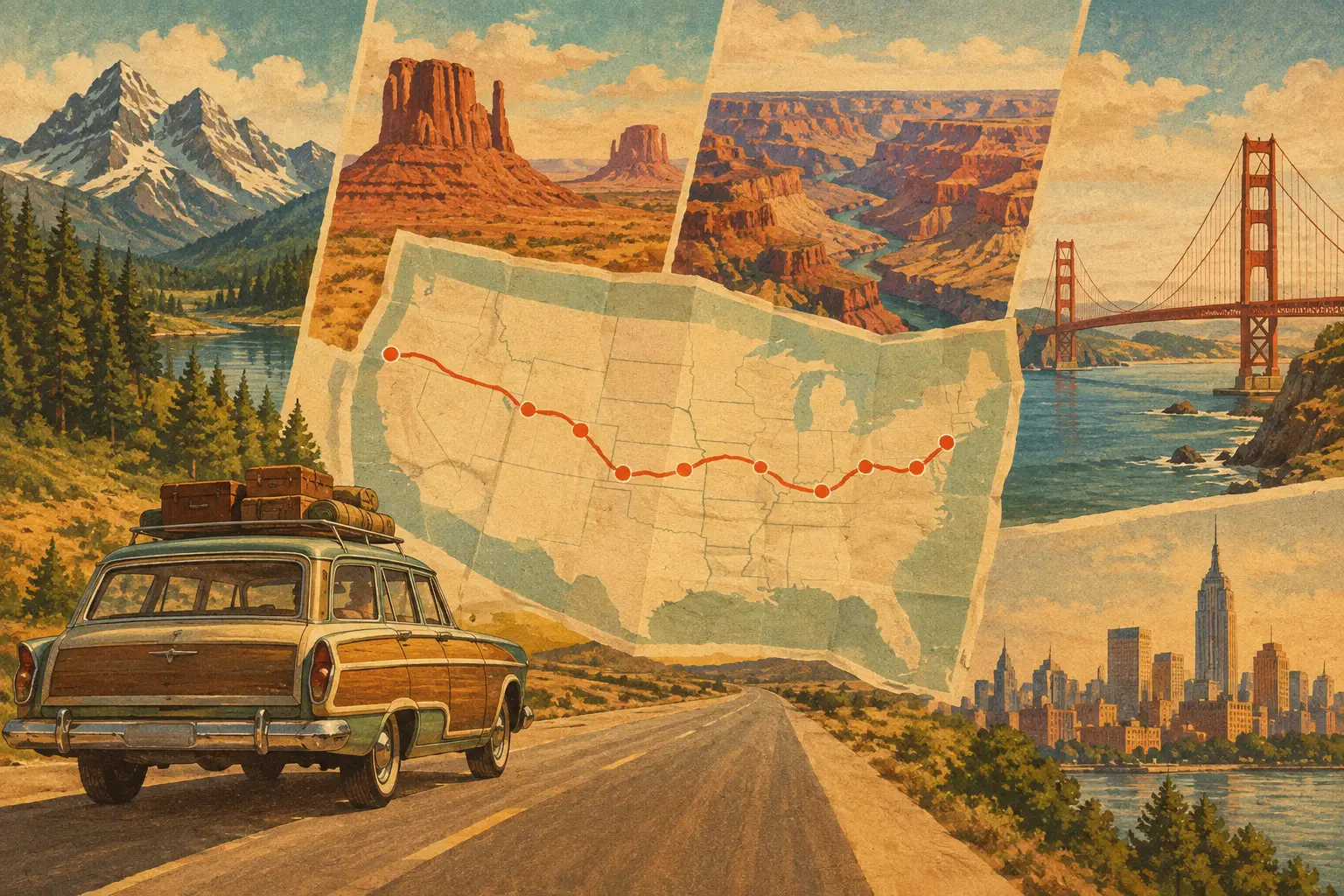
A coast-to-coast drive sounds simple until the group chat fills with saved restaurants, park reservations, hotel screenshots, and wildly different ideas of what counts as an acceptable eight-hour drive. This cross country itinerary example turns the classic New York-to-San Francisco route into a 14-day adventure with big scenery, great city stops, and enough breathing room to enjoy the ride.
This is not a race to the Pacific. It is a road trip built around a realistic rhythm: a few long travel days balanced by slower days in places worth staying awhile. You can swap in your own hometown, favorite national park, or must-try diner, but the pacing is what makes the route work.
Why this cross country itinerary example works
Fourteen days is a sweet spot for travelers who want to cross the country without spending every waking hour behind the wheel. You will cover roughly 3,700 miles, so it still requires commitment. But instead of stacking exhausting 10-hour drives day after day, this route includes city time, national park overnights, and shorter scenic stretches where the drive is part of the experience.
The route heads west through Pittsburgh and Chicago, crosses the Upper Midwest and the Great Plains, then drops through Yellowstone, Utah’s red-rock country, Las Vegas, Los Angeles, and the California coast. It is designed for late spring through early fall. Winter changes the equation dramatically, especially in Yellowstone, South Dakota, and mountain passes.
Before you lock it in, decide what matters more: iconic stops or extra time outdoors. A family with younger kids may skip Las Vegas for another night in Zion. A friend group chasing nightlife may trade a Chicago museum day for more time in Los Angeles. The best itinerary gives everyone a few non-negotiables, then keeps the rest flexible.
Plan: Your 14-day route at a glance
Days 1-3: New York City to Pittsburgh to Chicago
Day 1: New York City to Pittsburgh
Start early and drive about six to seven hours west. Pittsburgh is a strong first-night stop because it breaks up the trip without feeling like a mere highway exit. Grab dinner in Lawrenceville or the Strip District, then save the scenic overlook for sunset if your timing works.
Day 2: Pittsburgh to Chicago
This is one of the longer drives, around seven to eight hours with breaks. Keep the plan light after arrival: check in, take a walk along the river or lakefront, and choose one neighborhood for dinner rather than trying to see all of Chicago in one evening.
Day 3: Chicago
Park the car and enjoy a true no-driving day. Build a loose plan around a museum, architecture cruise, beach walk, or a food crawl. This is also the right moment to restock snacks, do laundry, and confirm the reservations coming up later in the route.
Days 4-6: Minneapolis, the Badlands, and the Black Hills
Day 4: Chicago to Minneapolis
Expect about six and a half hours on the road. Minneapolis offers a clean reset between urban energy and wide-open plains. Spend the evening around the North Loop or by the Mississippi River, then get a good night’s sleep before the landscape changes.
Day 5: Minneapolis to Badlands National Park
This is another long day, typically seven to eight hours. The payoff arrives at golden hour, when the Badlands’ striped buttes and ridges look almost unreal. Book a park-area stay ahead of time, especially during summer weekends, and download maps before leaving larger towns.
Day 6: Badlands to the Black Hills
Keep this drive short, roughly two hours, so you can actually explore. Sunrise in the Badlands, a scenic loop, and an afternoon in Custer State Park make for a memorable day. You can add Mount Rushmore if it is on your list, but the wildlife and winding roads in the Black Hills often become the surprise favorite.
Days 7-9: Billings, Yellowstone, and Jackson
Day 7: Black Hills to Billings, Montana
Plan for six to seven hours. Billings is a practical overnight that makes Yellowstone more enjoyable the next day. Choose a hotel with easy parking, refuel the car, and stock up on anything you may need for early park mornings.
Day 8: Billings to Yellowstone National Park
The mileage is manageable, but park traffic and wildlife can slow everything down. Enter Yellowstone with only two or three priorities, such as Grand Prismatic Spring, Old Faithful, and Hayden Valley. Trying to see the whole park in one afternoon creates stress fast.
Day 9: Yellowstone to Jackson, Wyoming
Drive south through Grand Teton National Park and let the route set the pace. This is a short travel day on paper, but you will want time for overlooks, trailheads, and photo stops. Jackson is lively, walkable, and an easy place for the group to split up for a few hours before dinner.
Days 10-12: Salt Lake City, Zion, and Las Vegas
Day 10: Jackson to Salt Lake City
The drive takes around five hours. Salt Lake City is a useful recharge stop with plenty of lodging options, restaurants, and supplies before you head deeper into Utah. Do not over-schedule this night. A relaxed dinner and an early start are enough.
Day 11: Salt Lake City to Zion National Park
This five-hour drive shifts from mountain views to red-rock drama. Stay near Springdale when possible so you can get into Zion early the next morning. If hiking The Narrows or Angels Landing is part of the plan, check current conditions and permit requirements well before departure.
Day 12: Zion to Las Vegas
Use the morning for a short hike or scenic shuttle ride, then drive about three hours to Las Vegas. The contrast is half the fun: quiet canyon walls in the morning, bright city energy by evening. Pick one dinner reservation or show, not five. You still have miles ahead.
Days 13-14: Los Angeles and San Francisco
Day 13: Las Vegas to Los Angeles
The route is usually four to five hours, depending on traffic. Arrive with one simple plan, whether that is a sunset at Santa Monica, tacos in East LA, or a low-key hotel pool afternoon. Los Angeles rewards travelers who choose a neighborhood and avoid zigzagging across the city.
Day 14: Los Angeles to San Francisco
You have two good choices. Take the faster inland route if you need to return a rental car or catch a flight. Take the coastal route if you can add an extra night, because Highway 1 deserves more than a rushed drive. Either way, end in San Francisco with a celebratory meal and a camera roll full of proof that you really did cross the country.
Book: Reserve the hard stuff first
For a trip like this, the big mistake is booking flights and hotels first, then discovering there is no available lodging near Yellowstone or Zion. Start with the dates that have the least flexibility: national park accommodations, popular campsites, one-way rental cars, and any activity requiring a permit.
One-way rentals can be expensive, particularly during peak summer travel, so compare the drop-off fee before committing to the route. Flying home from San Francisco is convenient, but an out-and-back route may make more financial sense for travelers with extra time. It depends on your budget, your vehicle, and whether the adventure is about the destination or the full drive.
Keep each confirmation beside its corresponding day rather than buried in an email thread. In Plan WeGo, your group can place stays, reservations, driving routes, and saved spots in the same shared itinerary, so everyone sees the latest plan without asking who has the confirmation number.
Go: Make the driving days feel lighter
A cross-country trip gets better when every passenger has a role. One person can handle navigation, another can find lunch stops, and someone else can track arrival times and lodging details. Rotate responsibilities so the driver is not also trying to answer every question from the back seat.
Build a daily departure time, but treat it as a target rather than a test of character. Weather, construction, a great roadside stand, or a bison crossing can change the day. Add a 60- to 90-minute buffer on long drives, especially when you have timed reservations or a park gate to reach before dark.
Save offline maps in rural areas, carry water and layers, and keep a small roadside kit accessible. The western portion of this route has long distances between services. That remoteness is part of the magic, but it rewards travelers who fill the tank before it is urgent.
Share: Turn the route into a story
Do not wait until you are home to sort through 2,000 photos and a pile of receipts. Add favorite stops as you go, save the diner that surprised everyone, and jot down the overlook that was better than the one all over social media. Those details turn a route into a trip someone else will want to follow.
For group travel, sharing the live itinerary also cuts down on decision fatigue. Your friends can see where you are headed, vote on a stop, or add a saved location without flooding the chat. When the trip ends, the map becomes more than logistics. It is a record of every detour, sunset, and inside joke along the way.
Leave room for one unplanned stop every day. The landmark you never expected, the small-town bakery, or the roadside view that makes everyone pull over is often the moment that stays with you longest.